 |
||||||
|
||||||
|
|||||||
|
|||||||
 |
|||||||
| Heinkel He-111 | |||||||
|
|||||||
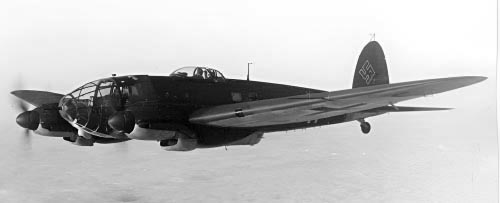
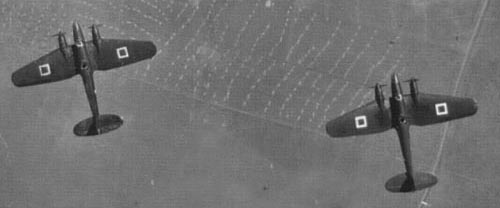
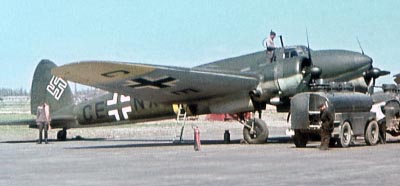
The Heinkel He-111 was not only Germany’s
most important Bomber aircraft in World War 2, but its late versions with the “Glasshouse” nose
made it one of the most iconic aircraft of the World War 2 era. |
|||||||
|
|||||||
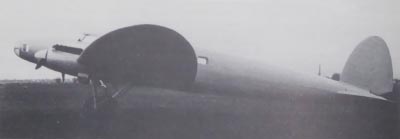
Its development started
with the single engine Heinkel He-70 “Blitz” (Flash or Lightning) from 1932, which
at the time was the fastest airliner in the world. The German military was looking
for a new medium bomber which led to the development of what was basically an enlarged
twin-engine version of the He-70. The A and C versions of the He-111 still show this
family resemblance, with similar engine shapes and the typical rounded wings. |
|||||||
|
|||||||
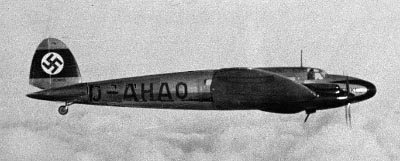
| This is why the airliner
versions are sometimes also called “Doppelblitz” (Double Flash). The prototype of the He-111
first flew in February 1935.
While the type was developed mainly as a bomber, the Airliner version entered service first.
In the guise of international flights, flight crews could secretly train flying all over Europe
to practice navigation for the upcoming war. |
|||||||
|
|||||||
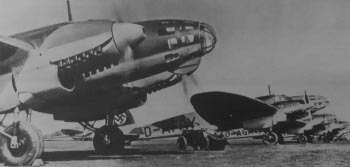
The early bomber versions had a stepped nose,
with a conventional canopy like the airliners and a glazed nose. On the He-111F,
the wing was simplified with a straight angled leading edge for cheaper production.
On the He-111P and later H, the nose was changed to the iconic assymmetric all-glazed nose. |
|||||||
|
|||||||
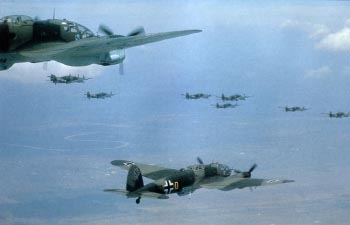
The He-111 flew everywhere the German Wehrmacht was fighting.
It carried bombs, torpedoes, cargo, the V-1 flying bomb, pulled gliders and cut cables.
It was a true workhorse and was constantly upgraded. |
|||||||
|
|||||||
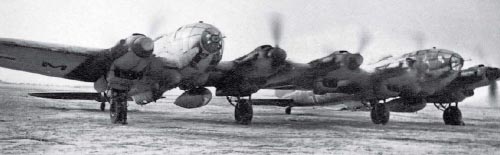
When more powerful multi-engine aircraft
with multiple engines were required to tow the Messerschmidt Me-321 Glider, the He-111Z
(“Zwilling” = Twin) was created by putting two He-111H’s together by connecting
them with a new wing in the middle with an additional engine.
It could carry four drop tanks under the fuselages and two Rocket-Assisted Take-off pods
(RATO) under the outer wings for additional power.
It could tow one Me-321 alone or several smaller gliders such as the Gotha G-242.
While a bomber variant and a long-range reconaissance variant of the Z-type were planned,
the Z-type was never actually used in either of these roles. |
|||||||
|
|||||||
Production of the He-111 in Germany ended
in 1944 in favour of fighter production, but a variant of the He-111 with license
built British Merlin engines, called the 2.111 was produced by CASA in Spain until
1960 and was operated into the 1960s. These aircraft were also used in films to depict
the He-111, most famously in 1969’s “The Battle of Britain”. |
|||||||
|
|||||||
| wingspan: 22.6m length: 16.4m height: 4m empty weight: 8680kg max loaded weight: 14000kg maximum speed: 440km/h range:2300km |
|||||||
| return to top |